TYPO3 and Microsoft - A perfect match
TYPO3 and Microsoft: The Best of Two Worlds
When companies want to combine a powerful content management system with a stable, scalable IT infrastructure, the combination of TYPO3 and Microsoft is especially attractive. TYPO3 stands for flexibility, multilingual capabilities, and strong editorial features. With Azure, Microsoft 365, Active Directory, and other enterprise services, Microsoft provides the right platform for security, integration, and growth.
The result is a solution that works for both marketing teams and IT departments: efficient in day-to-day use, expandable for new requirements, and resilient in an enterprise environment.
Why TYPO3 and Microsoft fit together so well
Many companies are not simply looking for a CMS, but for a digital platform that integrates into existing processes. This is exactly where the combination of TYPO3 and Microsoft plays to its strengths.
- TYPO3 impresses with editorial convenience, multilingual capabilities, and flexible website structures.
- Microsoft technologies provide secure authentication, cloud hosting, collaboration, and deeply integrated enterprise processes.
- Together, they create a foundation for centralized content management, efficient collaboration, and a modern digital user experience.
The key benefits at a glance
- Enterprise-ready: suitable for complex websites, intranets, and portal solutions.
- Scalable: grows with users, languages, tenants, and content.
- Strong integration: can be connected with Microsoft 365, Azure, Entra ID, and other systems.
- Editor-friendly: enables efficient maintenance by internal teams and agencies.
- Secure and controllable: supports modern security and access models.
Typical use cases for TYPO3 and Microsoft
The combination is especially suitable for companies that want to be digitally well positioned and already use various systems.
Corporate websites and group-wide web presences
TYPO3 is ideal for multilingual, structured, and brand-consistent websites. In combination with Microsoft services, user management, document processes, and internal approvals can be mapped efficiently.
Intranets and employee portals
With Microsoft 365, SharePoint, or Teams as the work environment and TYPO3 as the content platform, central information spaces for employees are created. This improves internal communication and reduces media discontinuities.
Multilingual international websites
TYPO3 is known for its strong multilingual management. For internationally active companies, this is a clear advantage, especially when content needs to be controlled centrally and delivered regionally.
Self-service portals and specialized applications
In combination with Microsoft Azure, TYPO3-based portals can be operated in scalable cloud architectures. This is useful for service portals, partner areas, or campaign platforms with fluctuating demand.
Running TYPO3 in a Microsoft environment
Many companies use TYPO3 in an IT landscape shaped by Microsoft. This is technically very feasible and often practical when existing tools and identity services are to continue being used.
Important Microsoft components in connection with TYPO3
- Microsoft Azure: hosting, scaling, backup, and cloud infrastructure
- Microsoft Entra ID: central user and permissions management
- Microsoft 365: collaboration, document processes, and internal communication
- SharePoint: document management and knowledge storage
- Power Automate: workflows and automations
- Teams: collaboration in project and editorial work
What this integration delivers in practice
With a carefully planned integration, editorial processes can be simplified, roles can be managed more clearly, and content can be published more efficiently. At the same time, users benefit from a consistent login and a familiar working environment.
The benefits for marketing, editorial, and IT
A major advantage of TYPO3 and Microsoft is that both sides of the company benefit: business units work faster, while IT retains control and security.
Benefits for marketing and content teams
- Easy maintenance of landing pages, news, and campaign pages
- Clear structure for multilingual content
- Clean separation of content, design, and technology
- Efficient collaboration with approval processes
Benefits for IT
- Integration into existing Microsoft identity and security concepts
- Predictable scaling in the cloud
- Good control over roles, permissions, and system access
- Compatibility with enterprise architectures and governance requirements
How to successfully integrate TYPO3 and Microsoft
To turn two strong systems into a truly good solution, a clear architecture is needed. What matters most is that requirements, interfaces, and responsibilities are defined early.
The typical integration process
- Requirements analysis: Which content, user groups, and workflows should be mapped?
- Architecture planning: Which Microsoft services will be integrated, and what will the hosting look like?
- Identity and permissions concept: How will login work, and who may edit which content?
- Interface development: Which data will be exchanged between TYPO3 and Microsoft systems?
- Testing and quality assurance: Functionality, security, and performance are checked.
- Go-live and support: Operations are stabilized and further optimized.
What companies should pay special attention to
- Clear separation of editorial and technical responsibilities
- GDPR-compliant processing of personal data
- Clear governance for content, roles, and approvals
- Scalable infrastructure for traffic peaks and growth
- Long-term maintenance and further development
TYPO3 and Microsoft compared with other solutions
Compared with purely closed platforms, TYPO3 offers more freedom in structure, extensibility, and hosting. In combination with Microsoft, it also provides the advantages of a modern enterprise platform without sacrificing editorial flexibility.
For many organizations, this balance is exactly what matters: open enough for customization, robust enough for enterprise operations.
FAQ: Common questions about TYPO3 and Microsoft
Can TYPO3 be integrated with Microsoft 365?
Yes, TYPO3 can be integrated into various processes with Microsoft 365 services such as SharePoint, Teams, or Entra ID. The exact scope depends on the requirements and the system architecture.
Is TYPO3 in a Microsoft Azure environment a good choice?
Yes, Azure is well suited as a hosting and infrastructure platform for TYPO3. This allows scaling, availability, and operations to be centrally managed.
For which companies is the combination suitable?
It is especially suitable for mid-sized companies, large enterprises, public institutions, and organizations with complex website structures, multiple languages, or internal portals.
What advantages does TYPO3 have over other CMSs in Microsoft environments?
TYPO3 offers strong multilingual capabilities, high flexibility, and professional editorial features. This makes it a good choice for demanding corporate websites and portals.
Conclusion: A strong combination for modern digital companies
TYPO3 and Conditional Access: The Right Architecture for Enterprise Deployments
How TYPO3 is securely and scalably integrated in Microsoft-centric enterprise environments with Conditional Access, Entra ID, SSO, and MFA – including architectural principles, best practices, and typical integration patterns.
Read article
TYPO3 and Single Sign-On: The Right Architecture for Microsoft Environments
How to make TYPO3 single sign-on work in Microsoft environments: architecture, protocols like SAML and OIDC, claim mapping, roles model, and governance for secure, scalable projects.
Read article
TYPO3 and OpenID Connect: Modern Architecture for Secure Editorial Workflows
How to integrate TYPO3 with OpenID Connect and Microsoft Entra ID: secure single sign-on architecture, automatic group mapping, and less manual effort for the editorial team.
Read article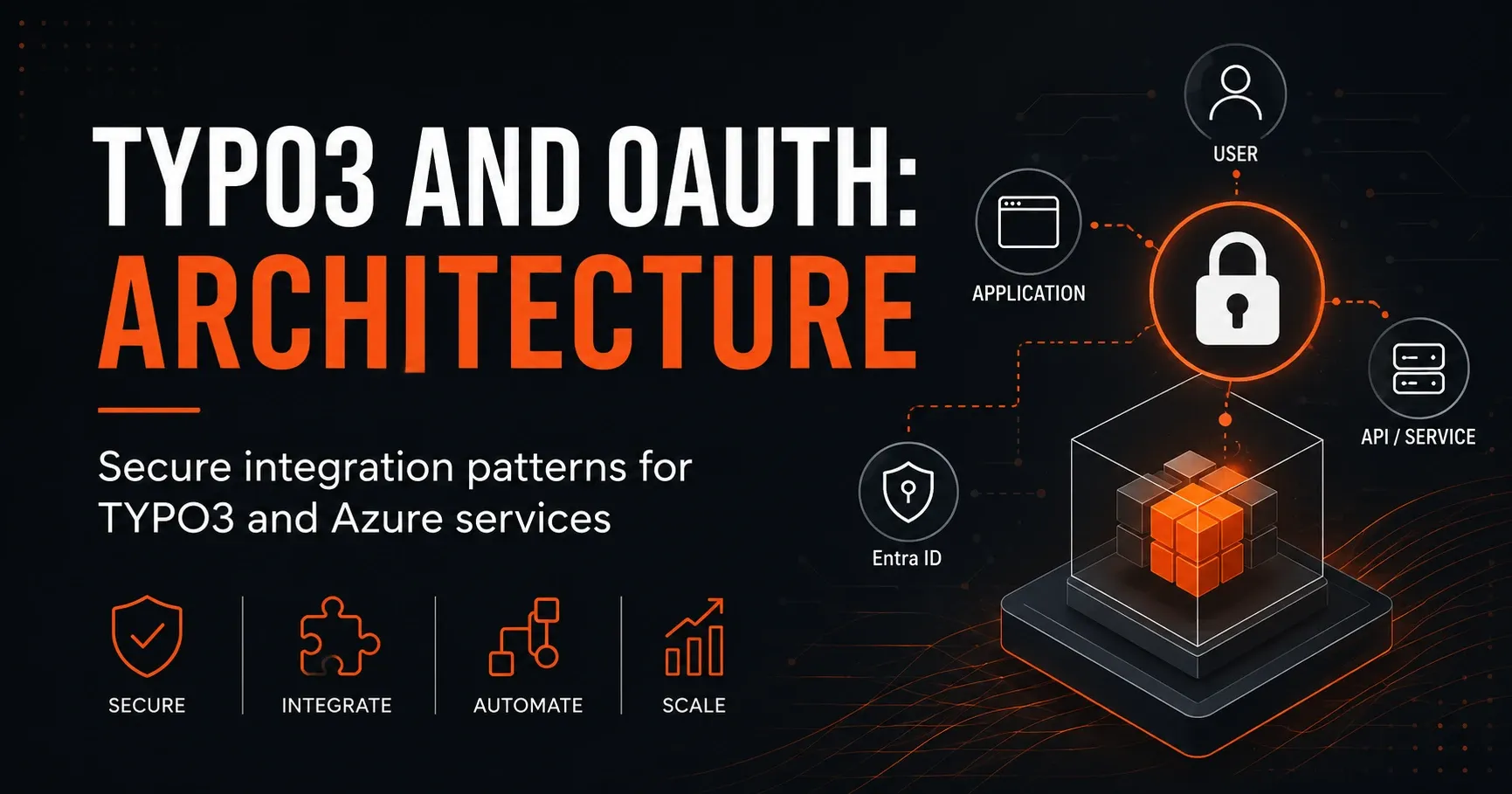
TYPO3 and OAuth: Building Secure Azure Integrations the Right Way
How to achieve secure TYPO3 integration with OAuth, OpenID Connect, and Microsoft Azure – from single sign-on to API access and best practices for enterprise architectures.
Read article